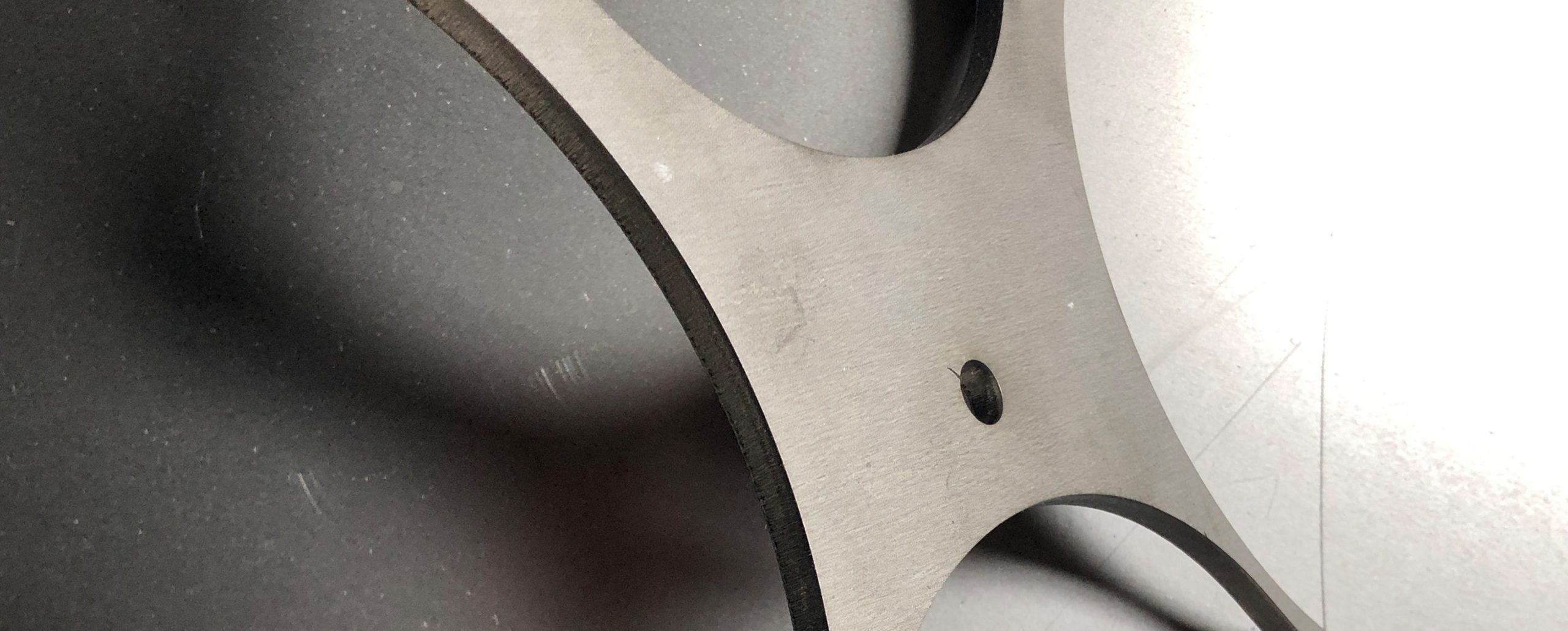
A CNC machined part is a component manufactured through Computer Numerical Control (CNC) technology, where pre-programmed computer software directs the movement of cutting tools and machinery to remove material from a workpiece and create precise parts. According to the International Journal of Advanced Manufacturing Technology (2024), CNC machined parts account for over 80% of precision metal parts produced in industrial manufacturing globally.
CNC machining represents a fundamental shift in manufacturing automation, replacing manual machine tool operation with digital fabrication systems. This automated manufacturing process enables the production of custom machined components with tight tolerances, complex geometries, and repeatable accuracy across both small batch production and large scale manufacturing runs.
Key Characteristics of CNC Machined Parts and Precision Engineering

CNC machined parts exhibit five defining characteristics that distinguish them from conventionally manufactured components:
- Dimensional Accuracy: CNC machining achieves tolerances as tight as ±0.001 inches (±0.025 mm), with typical tolerances for CNC machined parts ranging from ±0.005 to ±0.010 inches depending on material and geometry.
- Surface Finish Quality: The computer controlled machining process produces surface finishes from 125 Ra (rough machining) to 8 Ra (precision finishing) through controlled feed rate and cutting speed parameters.
- Geometric Complexity: Multi-axis machining centers, including 3-axis milling and 5-axis milling configurations, create intricate parts with undercuts, compound angles, and three-dimensional contours impossible with manual methods.
- Material Versatility: CNC machines process metals (aluminum, steel, titanium, brass, copper), plastics, composites, and exotic alloys, with materials for CNC machining selected based on mechanical properties and application requirements.
- Production Repeatability: Once programmed, CNC equipment produces identical parts with consistent dimensional accuracy across production runs of 1 to 100,000+ units.
How CNC Machined Parts Are Made: The Complete Manufacturing Process

The CNC machining process step by step involves six distinct phases, from digital design to finished component:
Step 1: CAD Design and Engineering (Computer-Aided Design)
Engineers create digital 3D models using CAD software such as SolidWorks, Fusion 360, or Mastercam. The CAD file defines all geometric tolerancing, dimensional tolerances, and surface treatment specifications. This design phase establishes critical parameters including wall thicknesses, hole locations, and feature relationships that determine how to design parts for CNC machining effectively.
Step 2: CAM Programming and G-Code Generation (Computer-Aided Manufacturing)
CAM software converts the CAD model into toolpath instructions that control machine tool operation. The software generates G-code and M-code—numerical control systems languages that specify:
- Tool movement along X-axis, Y-axis, and Z-axis coordinates
- Spindle RPM and cutting speed for each operation
- Feed rate for optimal material removal rate
- Tool changes between drilling, milling, and boring operations
- Coolant activation for thermal management
According to Manufacturing Engineering magazine (2024), modern CAD/CAM software reduces programming time by 60-75% compared to manual G-code programming methods.
Step 3: Workpiece Setup and Tool Selection
Machinists secure the raw material (workpiece) in the chuck or fixture of the CNC machine—whether a milling machine, lathe, or machining center. The tool holder receives cutting tools including drill bits, end mills, taps, reamers, and boring tools selected based on material properties and required operations.
Step 4: Machining Operations Execution
The CNC controller sends commands to servo motors or stepper motors that position the cutting tool or workpiece with precision. Common CNC operations include:
| Operation | Process Description | Typical Applications |
|---|---|---|
| Turning | Rotating workpiece against stationary cutting tool in a CNC lathe | Cylindrical parts, shafts, bushings |
| Milling | Rotating cutting tool removes material from stationary workpiece | Flat surfaces, pockets, slots, complex contours |
| Drilling | Rotating drill bit creates cylindrical holes | Bolt holes, through-holes, mounting points |
| Boring | Enlarging existing holes to precise diameters | Bearing bores, precision fits |
| Threading | Cutting helical threads using tap or die | Fastener holes, threaded shafts |
| Facing | Creating flat end surfaces perpendicular to rotation axis | Reference surfaces, mating faces |
| Grooving | Cutting narrow channels or recesses | O-ring grooves, snap ring grooves |
This subtractive manufacturing approach removes material systematically through these cutting operations, with the metal removal process controlled by programmed toolpaths that ensure machining accuracy and part precision.
Step 5: Part Finishing and Surface Treatment
After primary machining operations, parts may undergo secondary processes including deburring, polishing, anodizing, or coating. Surface finish options for CNC parts range from as-machined (125-63 Ra) to precision ground (16-8 Ra) depending on functional requirements.
Step 6: Quality Control and Inspection Methods
Inspection methods for CNC parts employ coordinate measuring machines (CMMs), optical comparators, and precision measurement tools including micrometers, calipers, and bore gauges. Quality standards such as ISO 2768 and ASME Y14.5 define acceptable geometric tolerancing for critical dimensions. According to the American Society for Quality (2025), statistical process control during CNC part production reduces defect rates to below 50 parts per million in high-precision manufacturing.
Types of CNC Machines and Machining Operations
CNC Milling Centers and Milling Operations
CNC milling machines use rotating end mills, face mills, and specialized cutting tools to remove material from stationary workpieces. Vertical machining centers position the spindle vertically, while horizontal machining centers orient the spindle horizontally for improved chip evacuation. The difference between 3-axis and multi-axis configurations determines complexity capabilities—3-axis milling machines move along X, Y, and Z axes, while 5-axis milling adds rotational axes for complete part access in a single setup.
CNC Lathes and Turning Operations
CNC turning operations rotate the workpiece while stationary cutting tools shape cylindrical features. CNC lathe operations excel at producing shafts, bushings, and rotational components with diameters from 0.125 inches to 24+ inches. Modern CNC lathes incorporate live tooling for milling, drilling, and tapping without workpiece repositioning.
Specialized CNC Drilling and Boring Equipment
Dedicated CNC drilling machines create multiple holes simultaneously with precision positioning, while boring operations enlarge pre-drilled holes to exact diameters with superior straightness and concentricity compared to drilling alone.
Common Misconceptions About CNC Machined Parts
Myth: CNC machining only works for metal parts.
Reality: CNC machined plastic parts represent approximately 30% of total CNC production volume (Plastics Technology, 2024), with materials including ABS, Delrin, PEEK, and polycarbonate commonly processed.
Myth: All CNC machined parts cost more than other manufacturing methods.
Reality: The cost of CNC machined parts depends on complexity, volume, and material—for quantities between 10-1000 units, CNC machining often costs less than injection molding due to lower tooling investment.
Myth: CNC machines operate without human oversight.
Reality: While automated cutting reduces manual intervention, skilled machinists perform setup procedures, tool changes, in-process inspection, and machining simulation verification to ensure quality.
Myth: Lead time for CNC machined parts always exceeds weeks.
Reality: Rapid prototyping services deliver prototype CNC machined parts in 1-3 business days, while production CNC machined parts typically ship within 5-15 business days depending on complexity and quantity.
CNC Machining vs. Manual Machining: Key Differences
The difference between CNC and manual machining fundamentally separates modern manufacturing from traditional methods:
| Factor | CNC Machining | Manual Machining |
|---|---|---|
| Control System | Computer numerical control via G-code programming | Direct human operation of machine controls |
| Precision Level | ±0.001″ to ±0.005″ typical, ±0.0001″ achievable | ±0.010″ to ±0.030″ typical with skilled machinist |
| Production Speed | 24/7 unattended operation possible, 3-5× faster cycle times | Single shift operation, operator-dependent speed |
| Repeatability | Identical parts across thousands of units | Part-to-part variation dependent on operator skill |
| Setup Time | Higher initial programming and toolpath generation time | Lower setup but slower per-part production |
| Complexity Capability | Complex geometries, 3D contours, multi-axis features | Limited to simpler geometries accessible by operator |
For those seeking to understand what is CNC machining and how does it work compared to traditional methods, the CNC machining process explained through comparative analysis demonstrates clear advantages in precision, consistency, and production efficiency for modern manufacturing requirements.
Practical Applications: What Are CNC Machined Parts Used For?
Aerospace CNC Machined Components
CNC machining for aerospace parts produces critical components including turbine blades, landing gear components, and structural brackets from titanium, aluminum, and Inconel alloys. Aerospace applications demand precision tolerances of ±0.0005″ and comprehensive inspection methods including non-destructive testing.
Automotive CNC Manufacturing
CNC machining for automotive parts creates engine blocks, transmission cases, brake components, and suspension parts. High volume CNC part production in automotive applications often exceeds 100,000 units annually per part number, with aluminum CNC machined parts process optimization critical for cost management.
Medical Device CNC Machined Parts
Medical device CNC machined parts include surgical instruments, implant components, and diagnostic equipment housings manufactured from biocompatible materials including titanium, stainless steel, and medical-grade plastics. FDA regulations require complete traceability and validation of the CNC manufacturing process.
Industrial Machinery and Component Manufacturing
Industrial machining produces hydraulic cylinders, valve bodies, pump housings, and precision gears for construction, agriculture, and manufacturing equipment. Steel CNC machined parts manufacturing and brass CNC machined components serve heavy-duty applications requiring wear resistance and structural integrity.
Electronics and Consumer Products
Precision CNC machined components in electronics include heat sinks, enclosures, connector housings, and mounting brackets. Plastic CNC machining capabilities enable production of lightweight, non-conductive parts for consumer electronics applications.
Materials, Tolerances, and Technical Specifications
Common Materials for CNC Machining
Material selection impacts machining parameters, tool life, and finished part performance. According to Gardner Business Media (2025), material distribution in precision machining includes:
- Aluminum alloys (6061, 7075): 40% of CNC machined metal parts—excellent machinability, strength-to-weight ratio
- Stainless steel (303, 304, 316): 25%—corrosion resistance, moderate machining difficulty
- Carbon steel (1018, 1045): 15%—high strength, excellent machinability
- Brass and copper: 8%—electrical conductivity, decorative applications
- Titanium (Grade 5): 5%—aerospace applications, challenging machinability
- Engineering plastics: 7%—lightweight, chemical resistance
Machining Accuracy and Part Precision Standards
Precision machining services achieve varying accuracy levels based on equipment capability, material properties, and quality control methods. Standard machining accuracy ranges from ±0.005″ for general commercial parts to ±0.0005″ for high-precision components. Geometric tolerancing controls form, orientation, profile, and runout beyond basic dimensional tolerances.
Choosing CNC Machining for Your Parts: Advantages and Considerations
Advantages of CNC Machined Parts
How to choose CNC machining for parts depends on evaluating eight key benefits:
- High precision manufacturing with consistent dimensional accuracy
- Complex part geometries impossible with other manufacturing techniques
- Material flexibility across metals, plastics, and composites
- Scalability from prototype to production volumes
- Reduced labor costs through manufacturing automation
- 24/7 production capability with minimal supervision
- Quick design iterations without tooling changes
- Superior surface finish quality compared to casting or forging
Disadvantages of CNC Machining Process
Despite advantages, CNC machining limitations include higher per-part costs at volumes exceeding 10,000 units compared to injection molding, material waste from subtractive manufacturing (15-30% typical), and extended lead times for complex custom CNC machined parts manufacturing requiring extensive programming and setup.
Conclusion: The Future of CNC Machined Part Manufacturing
CNC machined parts represent the intersection of digital manufacturing, precision engineering, and automated production. As of 2025, advances in machining technology including artificial intelligence for toolpath optimization, adaptive control systems, and hybrid additive-subtractive machines continue expanding what is possible in component production. Understanding what is a CNC machined part and how is it made empowers engineers, designers, and manufacturers to leverage this manufacturing technique effectively for applications demanding precision, complexity, and reliability.