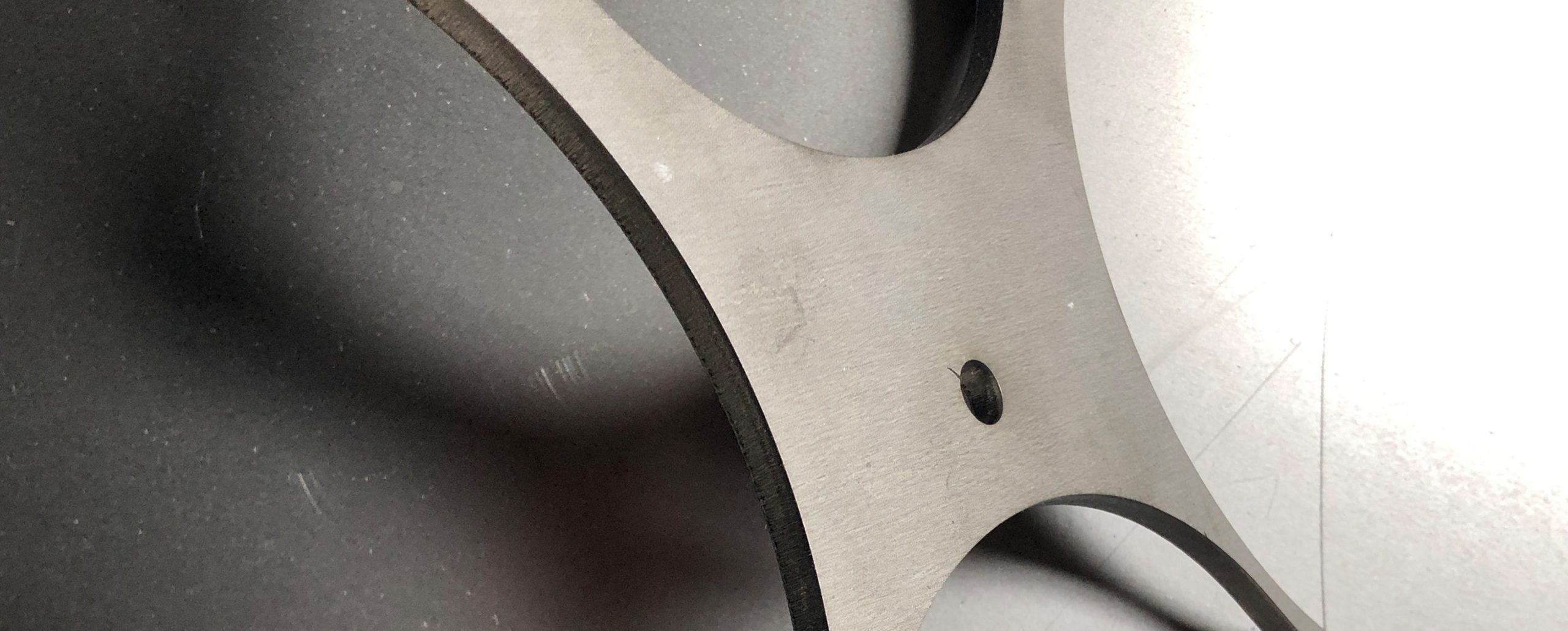
Sheet metal fabrication and structural steel fabrication are two distinct metal working processes that differ primarily in material thickness, applications, and load-bearing requirements. Sheet metal fabrication works with thin gauge metal (typically 0.006 to 0.25 inches thick) for applications like HVAC systems, enclosures, and automotive components, whereas structural steel fabrication uses thick steel members (0.25 inches and above) for building frameworks, bridges, and load-bearing structures.
What Are the Key Differences Between Sheet Metal Fabrication and Structural Steel Fabrication?
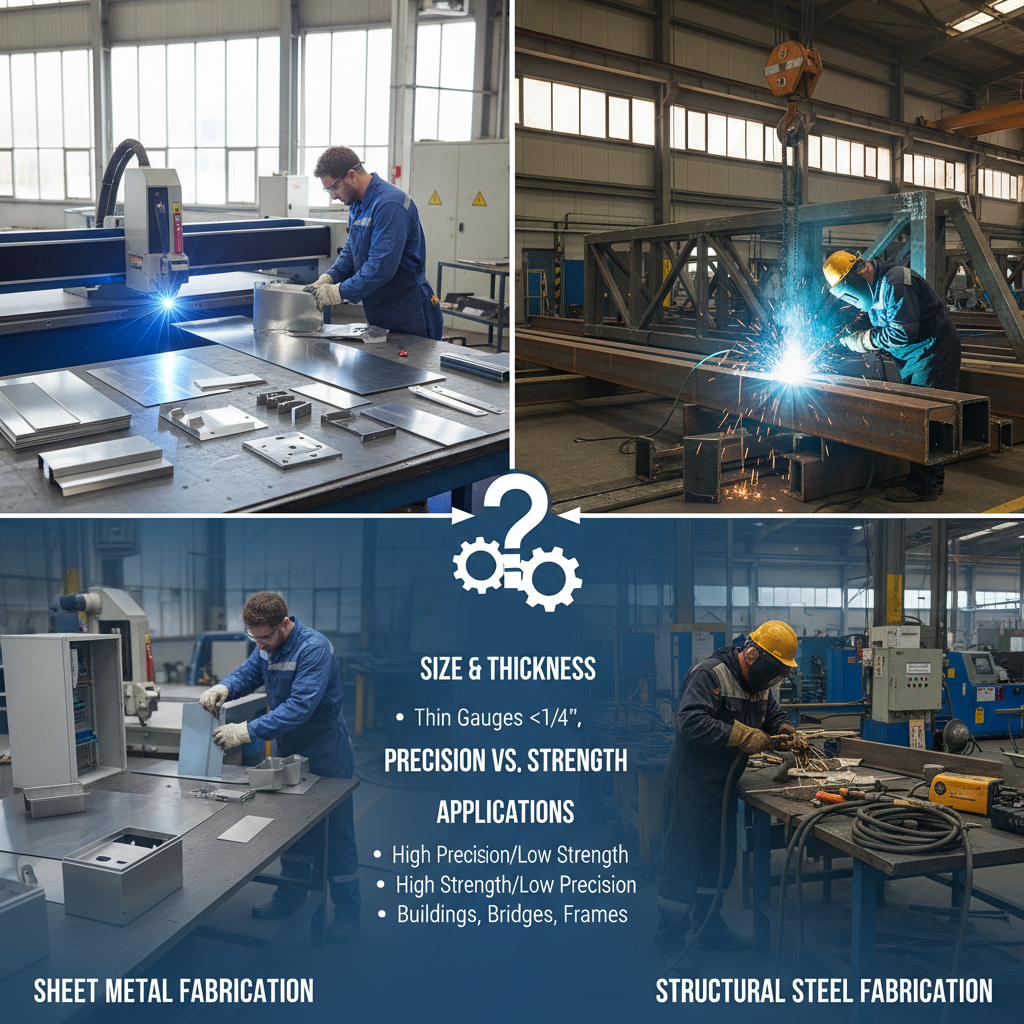
Professional illustration of What Are the Key Differences Between Sheet Metal Fabrication and Structural Steel Fabrication?
The fundamental difference between sheet metal fabrication and structural steel fabrication lies in material thickness and intended structural purpose. According to the American Institute of Steel Construction (AISC, 2024), structural steel fabrication focuses on creating heavy gauge steel components designed to support substantial loads in construction industry applications. In contrast, sheet metal fabrication involves precision metal forming of light gauge metal for functional and decorative metal fabrication projects.
Material thickness serves as the primary distinguishing factor. Sheet metal fabrication typically processes materials ranging from 30 gauge (0.012 inches) to 7 gauge (0.1875 inches), while structural steel fabrication handles materials from 0.25 inches to several inches thick. This thickness difference directly impacts the fabrication techniques comparison, equipment requirements, and final application suitability.
Quick Comparison: Sheet Metal Fabrication vs Structural Steel Fabrication
| Feature | Sheet Metal Fabrication | Structural Steel Fabrication |
|---|---|---|
| Material Thickness | 0.006-0.25 inches (30-7 gauge) | 0.25 inches to 6+ inches |
| Primary Materials | Aluminum, stainless steel, galvanized steel, cold-rolled steel | Carbon steel, hot-rolled steel, structural steel beams, steel plates |
| Common Products | Metal panels, ductwork, enclosures, brackets, chassis, cabinets | I-beams, H-beams, steel columns, trusses, girders, building structures |
| Primary Industries | HVAC, automotive industry, aerospace industry, manufacturing industry | Construction industry, commercial steel work, building framework |
| Load Bearing Capacity | Light to moderate (non-structural) | Heavy duty (structural support) |
| Key Processes | Laser cutting, punching, stamping, press brake forming | Plasma cutting, heavy welding, steel beam fabrication, steel erection |
| Typical Project Cost | $500-$10,000 (moderate) | $10,000-$500,000+ (higher) |
| Precision Requirements | ±0.005 inches (high precision) | ±0.0625 inches (standard tolerances) |
How Does Material Thickness Impact Sheet Metal Fabrication vs Structural Steel Fabrication?

Material thickness determines fabrication processes, equipment selection, and structural engineering requirements. Thin gauge fabrication in sheet metal working uses gauge thickness measurements, where higher gauge numbers indicate thinner material. According to industry standards (AWS, 2023), 18-gauge steel (0.048 inches) represents typical sheet metal for metal enclosures, while 14-gauge (0.075 inches) suits heavier sheet metal applications.
Structural steel elements employ absolute thickness measurements because thin metal processing standards do not apply to heavy structural steel members. Structural steel beams commonly range from 0.25 inches for lighter angle iron to 6 inches or more for steel plates supporting major building structures. This thickness difference creates distinct strength requirements for structural steel vs sheet metal fabrication projects.
The thickness limitations in sheet metal fabrication compared to structural steel directly affect load bearing fabrication capabilities. Sheet metal components typically handle forces up to 5,000 pounds per square inch in specific applications, whereas structural steel components routinely support loads exceeding 50,000 pounds per square inch in construction steel work applications.
What Fabrication Processes Differ Between Sheet Metal and Structural Steel Work?
Metal fabrication processes vary significantly based on material thickness and final application. Sheet metal fabrication processes include laser cutting for precision metal cutting with tolerances of ±0.005 inches, CNC machining for complex metal component production, and press brake operations for metal bending operations up to 90-degree angles. These thin metal working techniques prioritize precision over raw structural strength.
Structural steel fabrication methods emphasize durability of sheet metal fabrication versus structural steel fabrication through different metal joining methods. Plasma cutting handles thick steel processing, removing material up to 6 inches thick at rates of 100-500 inches per minute. Steel welding procedures follow American Welding Society standards, with multi-pass welds creating joints stronger than base materials in structural member fabrication projects.
Metal forming techniques also diverge substantially. Sheet metal forming uses stamping and rolling to create metal panels and ductwork with minimal material waste. Structural metalwork employs heavy-duty equipment for steel framework construction, including 500-ton presses for bending steel columns and specialized machinery for creating custom steel fabrication components like channel steel and structural steel elements.
Cutting Technologies: Precision vs Power
Laser cutting dominates precision sheet metal work, delivering accuracy within 0.005 inches for aluminum, stainless steel, and galvanized steel up to 0.5 inches thick. This metal cutting service excels in automotive sheet metal fabrication and aerospace industry applications requiring intricate metal part fabrication.
Plasma cutting serves as the primary method for industrial steel products exceeding 0.5 inches thickness. According to fabrication industry data (2024), plasma systems cut carbon steel up to 6 inches at speeds 40% faster than oxyfuel methods, making them essential for heavy steel fabrication and steel structural components manufacturing.
Which Industries Require Sheet Metal Fabrication Versus Structural Steel Fabrication?
Industries that use sheet metal fabrication vs structural steel fabrication differ based on product requirements and structural specifications. HVAC metal fabrication represents the largest sheet metal sector, producing ductwork, metal panels, and ventilation systems. The HVAC systems market consumed 2.3 million tons of sheet metal in 2023, with galvanized steel comprising 65% of materials used.
The automotive industry relies on precision sheet metal for chassis, body panels, and brackets requiring tight fabrication tolerances. Modern automotive sheet metal fabrication versus structural steel fabrication demonstrates the precision requirements in sheet metal vs structural steel fabrication, with automotive components maintaining tolerances within ±0.010 inches.
Structural steel fabrication for construction dominates the construction industry, where building steel fabrication creates frameworks for commercial and industrial structures. The American Institute of Steel Construction reports that structural steel installation accounts for 40% of all metal fabrication comparison projects by tonnage, with I-beams, H-beams, and steel columns forming the backbone of architectural metalwork types in modern construction.
Industrial fabrication serves manufacturing facilities requiring both custom metal manufacturing approaches. Metal manufacturing services include thin metal processing for equipment enclosures and heavy duty steel for machinery frameworks, demonstrating how fabrication workshop capabilities often encompass both industrial vs commercial fabrication needs.
What Equipment Differences Exist in Sheet Metal vs Structural Steel Fabrication?
Fabrication equipment differences reflect the distinct requirements of light gauge metal versus heavy gauge steel processing. Sheet metal fabrication shops invest in CNC machining centers, laser cutting systems, and press brake equipment for metal bending operations. A typical precision sheet metal facility contains laser cutters ranging from 2kW to 6kW power, handling materials up to 0.5 inches thick with cutting speeds of 400-800 inches per minute.
Structural steel fabrication shops require steel fabrication tools designed for thick steel fabrication, including plasma cutting tables capable of 200-amp output, heavy-duty press brakes with 500-ton capacity, and industrial-grade welding equipment meeting OSHA and AWS standards. The fabrication machinery investment for structural steel typically exceeds sheet metal equipment costs by 300-400% due to higher capacity requirements.
Metal processing equipment for sheet metal includes specialized tools like shearing machines (cutting up to 0.25 inches), punching equipment (creating holes at 600 strokes per minute), and stamping presses for high-volume metal assembly services. These metal shop services prioritize speed and precision in thin metal working.
Steel framework manufacturing employs cranes, gantries, and material handling systems for moving structural steel beams weighing up to 20 tons. Fabrication project types involving I-beams, girders, and trusses require overhead lifting capacity and specialized welding techniques comparison to standard sheet metal operations, with some steel erection equipment representing millions in capital investment.
How Do Strength and Load-Bearing Capabilities Compare?
Load bearing capacity of structural steel vs sheet metal fabrication represents the most critical performance distinction. Structural steel properties include yield strengths ranging from 36,000 to 100,000 pounds per square inch (PSI) for carbon steel grades, with I-beams supporting distributed loads exceeding 100 tons across 30-foot spans.
Sheet metal characteristics emphasize forming flexibility over structural strength requirements. According to metal strength comparison data (2024), 16-gauge stainless steel provides tensile strength of 75,000 PSI but lacks the cross-sectional geometry for load-bearing applications beyond equipment enclosures and metal panels.
Which is stronger sheet metal fabrication or structural steel fabrication depends on application context. Structural steel components derive strength from both material properties and geometric design. An 8-inch H-beam fabricated from standard A36 steel exhibits load-bearing capacity 50-100 times greater than sheet metal of equivalent weight, demonstrating how structural steel elements optimize strength through shape engineering in building framework applications.
The durability of sheet metal fabrication versus structural steel fabrication also varies by environmental factors. Structural steel with proper corrosion resistance in sheet metal versus structural steel fabrication—such as hot-dip galvanizing—maintains structural integrity for 75-100 years in outdoor applications. Sheet metal components typically serve 20-40 years in similar conditions unless constructed from stainless steel or aluminum with enhanced environmental factors affecting sheet metal vs structural steel fabrication performance.
What Are the Cost Differences Between Sheet Metal and Structural Steel Fabrication?
Cost differences between sheet metal and structural steel fabrication stem from material pricing, labor intensity, and equipment requirements. Sheet metal projects average $15-$45 per pound for fabricated components, with precision metal forming adding 20-30% to base material costs. Custom metal manufacturing of enclosures or cabinets typically ranges from $500 to $10,000 depending on complexity and volume.
Structural steel fabrication costs run $1.50-$3.00 per pound for standard shapes like angle iron and channel steel, but total project costs escalate due to assembly time for sheet metal versus structural steel fabrication projects. A typical commercial steel work project involving steel beam production and installation averages $25,000-$150,000, with complex building structures reaching $500,000 or more.
Fabrication cost comparison reveals that sheet metal fabrication delivers faster turnaround on smaller projects. Simple metal panels or brackets complete within 2-5 business days, whereas structural steel installation for building framework requires 4-12 weeks including steel welding services, quality control inspections, and steel erection activities.
Transportation of sheet metal fabrication vs structural steel fabrication also impacts total costs. Sheet metal components ship via standard freight at $0.15-$0.35 per pound, while structural steel elements require specialized heavy-haul transportation adding $500-$2,000 per load for oversize steel columns or girders.
Use-Case Scenarios: When to Choose Each Fabrication Type
Scenario 1: HVAC System Installation for 50,000 sq ft Commercial Building
Choose sheet metal fabrication. This application requires ductwork fabrication using galvanized steel in 20-24 gauge thickness. Sheet metal working processes deliver the metal forming techniques needed for custom ductwork with precise dimensions, installation methods for sheet metal versus structural steel fabrication favor lighter components, and the weight considerations for sheet metal vs structural steel fabrication (40-60% lighter) reduce structural load on building framework.
Scenario 2: Manufacturing Facility Expansion with 40-Foot Clear Span
Choose structural steel fabrication. Load-bearing fabrication requirements demand I-beams or H-beams capable of supporting roof systems and overhead crane loads. Steel framework construction provides strength requirements for structural steel vs sheet metal fabrication, with W18x50 beams supporting 30-ton distributed loads. The longevity of sheet metal fabrication compared to structural steel favors structural steel for permanent structures requiring 75+ year service life.
Scenario 3: Custom Electronics Enclosures for Industrial Controls
Choose sheet metal fabrication. Precision requirements in sheet metal vs structural steel fabrication align with tight tolerances (±0.005 inches) needed for mounting electronics. Metal enclosures fabricated from 16-gauge stainless steel or aluminum provide adequate protection while enabling complex metal bending operations for integrated mounting brackets and access panels. Finishing processes for sheet metal vs structural steel fabrication offer powder coating or anodizing for corrosion resistance.
Scenario 4: Multi-Story Parking Garage Framework
Choose structural steel fabrication. Construction steel work requires structural steel beams, steel columns, and girders meeting AISC specifications for seismic and wind loads. Structural specifications demand steel structural components with certified material properties and welding techniques for sheet metal versus structural steel fabrication performed by AWS-certified welders. Inspection standards for sheet metal vs structural steel fabrication include non-destructive testing ensuring structural integrity.
Decision Framework: Selecting Between Sheet Metal and Structural Steel Fabrication
Choose sheet metal fabrication when your project requires:
- Material thickness under 0.25 inches for thin metal processing
- Non-structural components like metal panels, enclosures, or chassis
- High precision metal cutting with tolerances within ±0.010 inches
- Applications in HVAC metal fabrication, automotive industry, or electronics
- Quick turnaround times (2-5 days) for prototype or small-batch production
- Lighter weight solutions reducing transportation and installation costs
- Complex forming operations like stamping, punching, or intricate bending
Choose structural steel fabrication when your project requires:
- Load-bearing capacity exceeding 10,000 pounds for building frameworks
- Materials thicker than 0.25 inches for heavy-duty applications
- Structural steel elements like I-beams, H-beams, or steel columns
- Compliance with AISC standards and structural engineering requirements
- Long-term durability (75+ years) in permanent construction applications
- Heavy gauge steel components for industrial steel products
- Large-scale construction industry or commercial steel work projects
Understanding what are the differences between sheet metal and structural steel work enables informed decisions for metal material selection. For comprehensive guidance on sheet metal vs. structural steel fabrication specific to your project requirements, consulting experienced fabrication industry professionals ensures optimal material selection, fabrication techniques comparison, and cost-effective metal manufacturing services.
The complexity in sheet metal fabrication compared to structural steel ultimately depends on project-specific factors including load requirements, environmental conditions, budget constraints, and timeline expectations. Both fabrication types serve essential roles in modern manufacturing and construction, with material thickness serving as the primary determinant for choosing between these complementary metal working processes.